Visit to Duke Free Electron Laser Laboratory
Tags: science physics north carolina photos

Today I had the chance to visit the Duke Free Electron Laser Laboratory (DFELL). I had never seen a particle accelerator before, so it was a great experience.
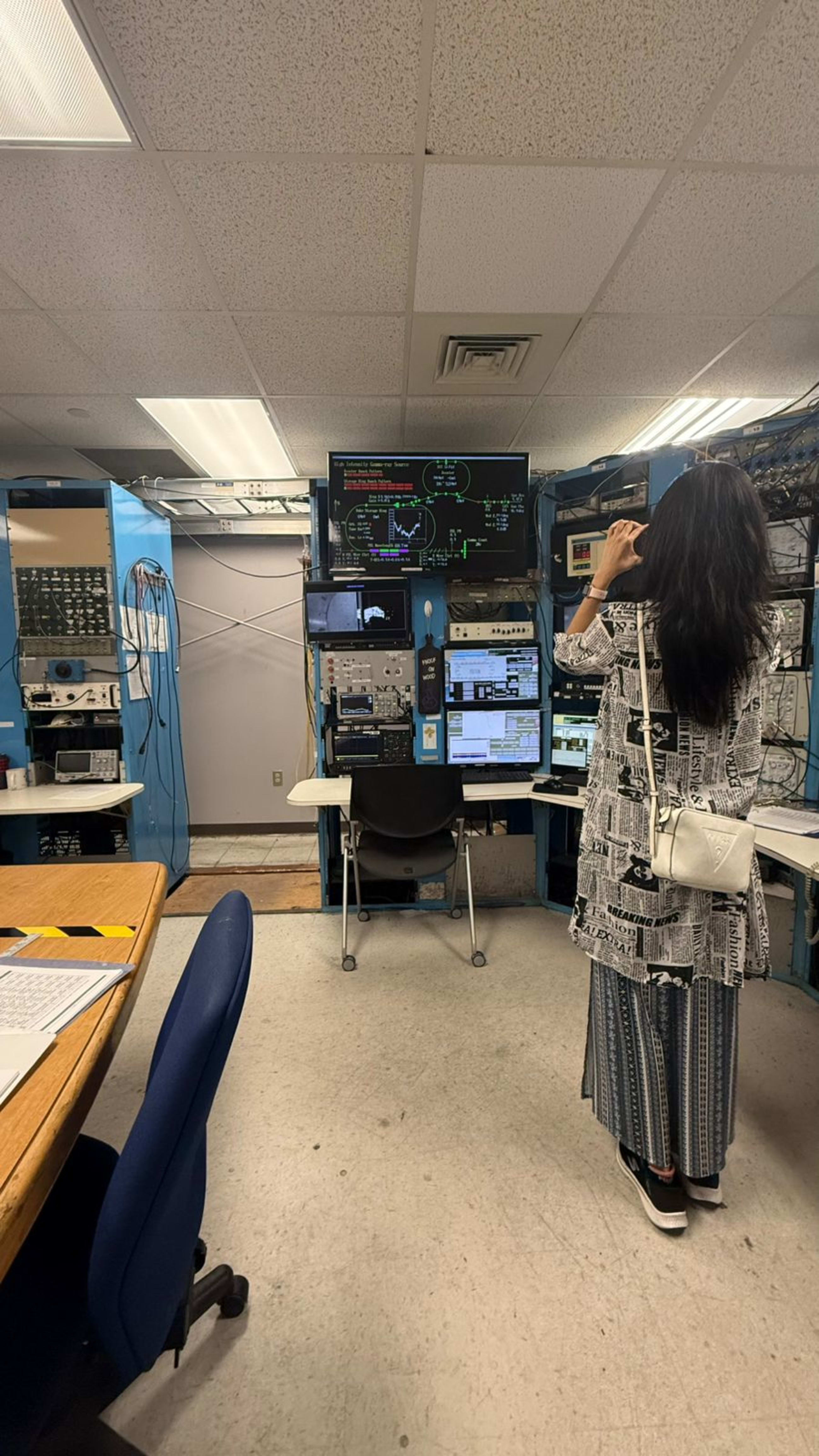


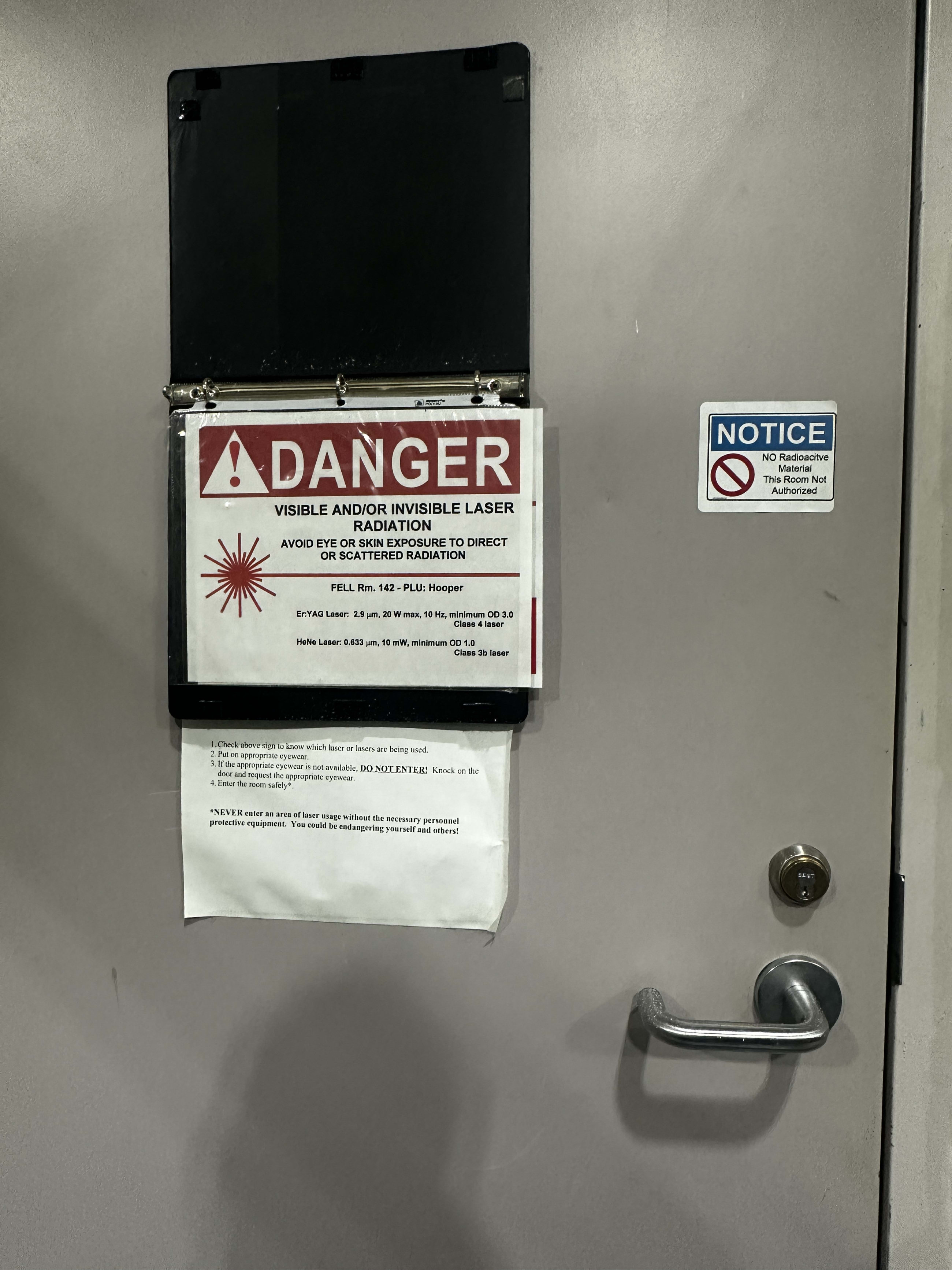

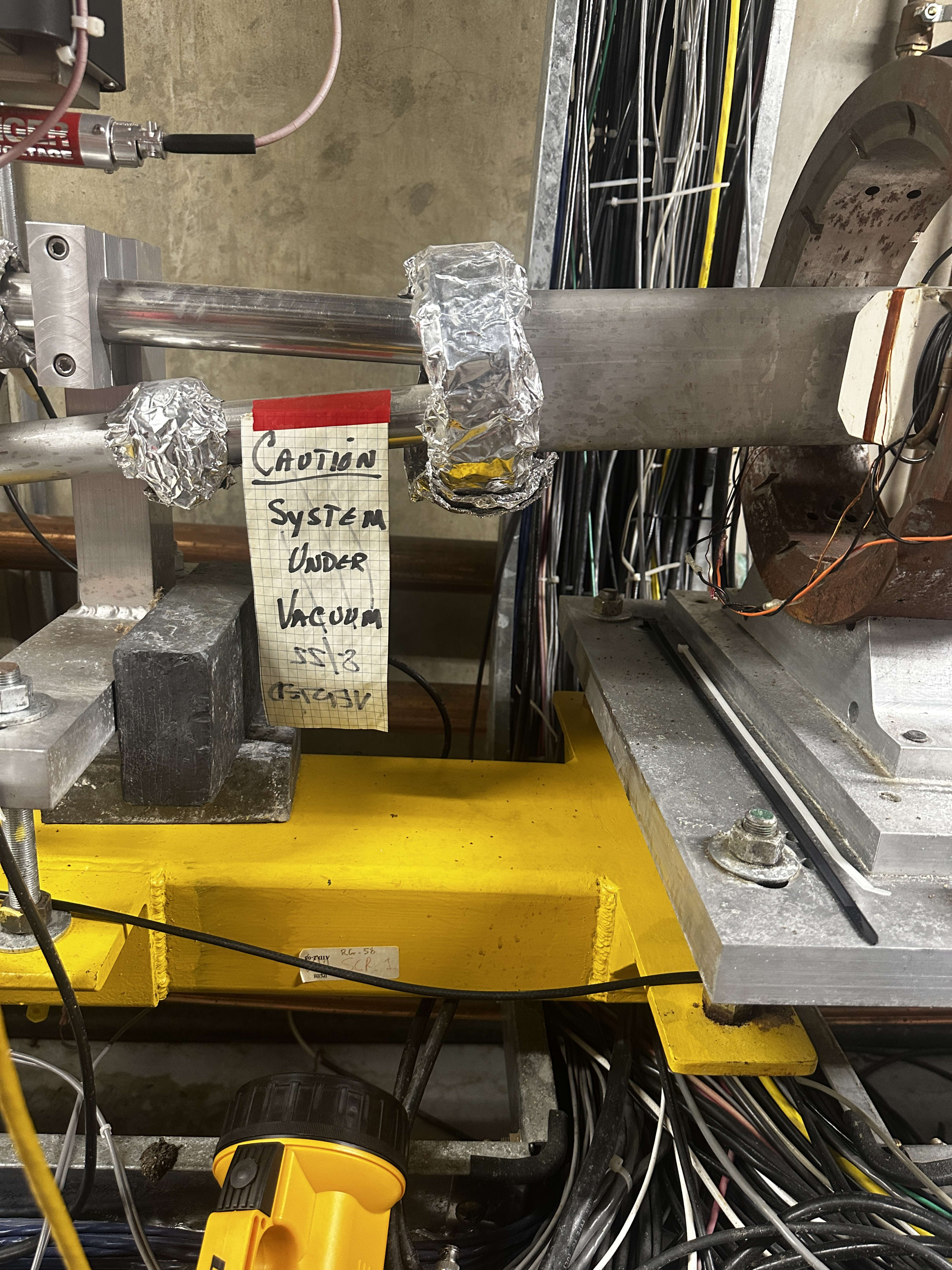

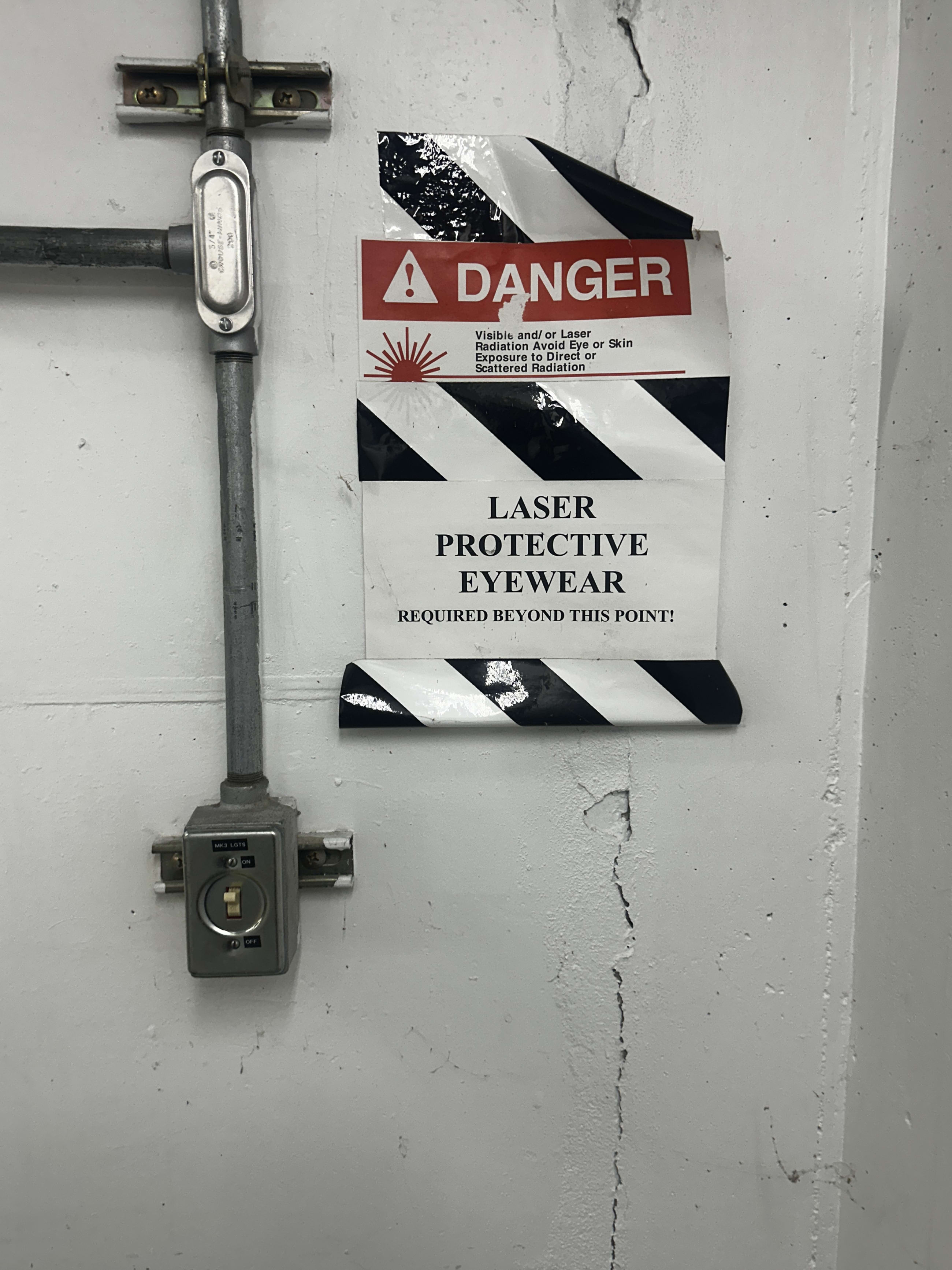



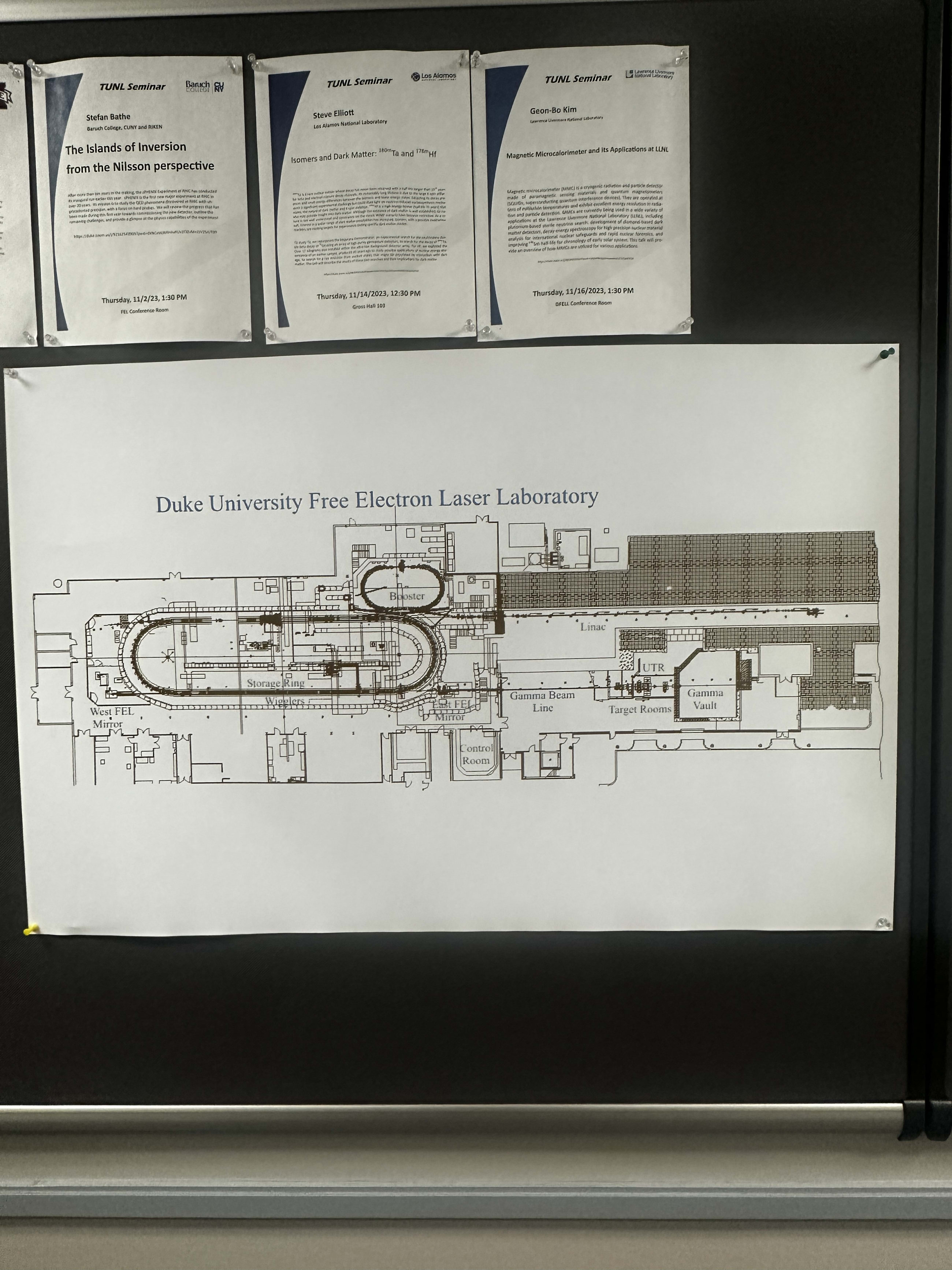


Our host Greg gave us some theoretical background before showing the lab. Some key takeaways:
1. Electrons are a popular choice for particle accelerators
Electrons are fundamental particles (no internal structure) and very light, which makes them easier to accelerate to high speeds compared to heavier particles like protons.
2. How electrons are generated and accelerated
Electrons are produced using a hot cathode, where a heated filament releases electrons.
They are then accelerated using RF cavities (microwave fields), reaching energies of around 1.2 GeV.
3. Accelerating electrons produces light
Whenever a charged particle accelerates (including when it changes direction), it emits electromagnetic radiation.
4. Synchrotron radiation
In the accelerator, electrons are bent using powerful magnets.
-
The electrons follow the curved path
-
The emitted radiation travels straight
This is called synchrotron radiation.
5. Compton backscattering and gamma rays
The emitted light is reflected back using mirrors and made to collide with the high-speed electrons.
This interaction, called Compton backscattering, increases the photon energy and produces gamma rays.
6. Gamma rays
Gamma rays are:
- Very high energy
- Very high frequency
- Very short wavelength
Russian Connection
The RF cavity and microwave generator (klystron) used in the accelerator were acquired from the Budker Institute in Russia during the 1990s, when relations between the US and the former Soviet Union were improving.
Extreme conditions required
To keep the accelerator running:
-
Vacuum:
Pressure is around 10⁻¹⁰ Torr, close to deep space conditions. -
Cooling:
High heat is removed using deionized water flowing through copper systems. -
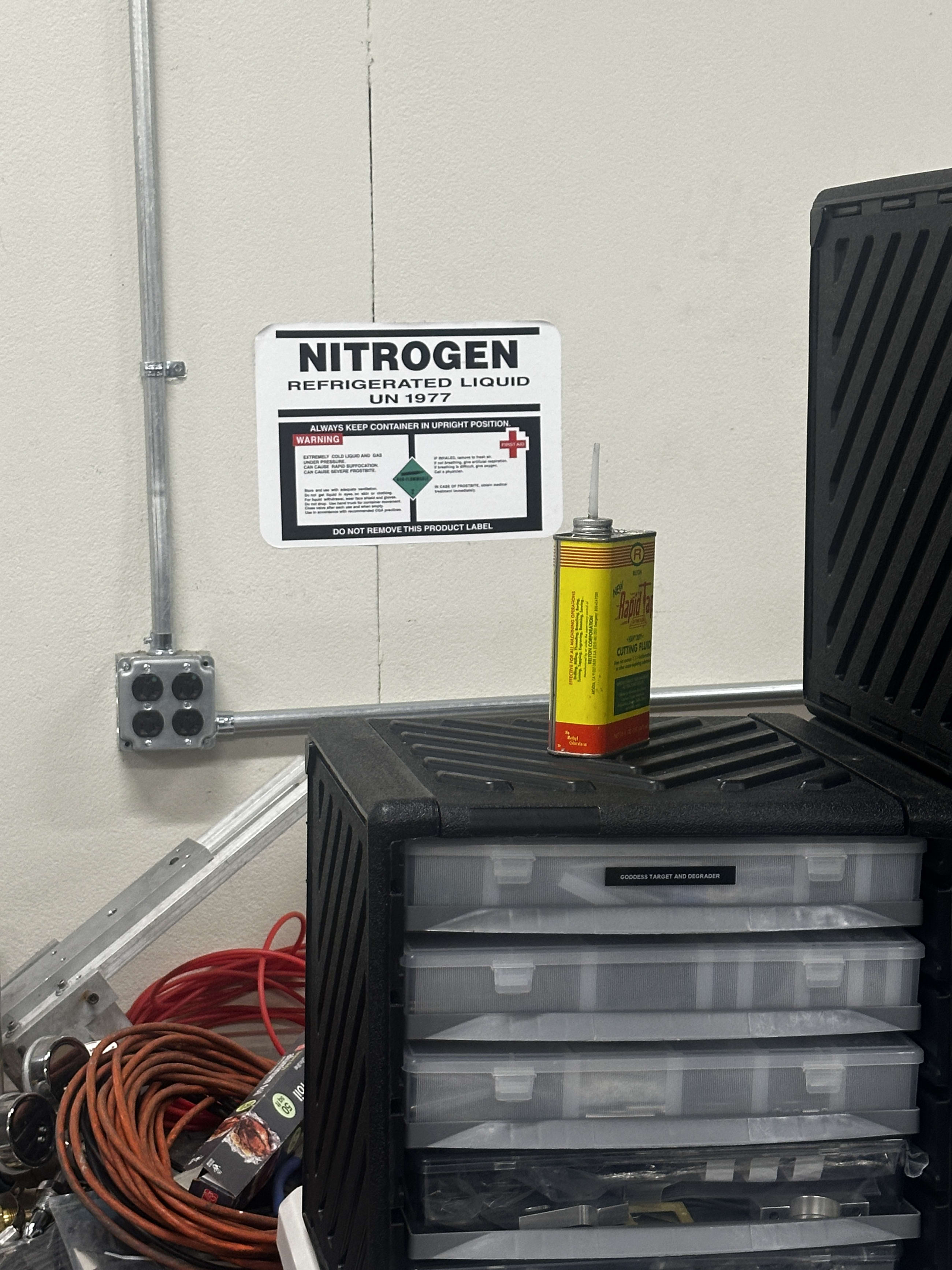
Liquid Nitrogen:
Used for cryopumping to maintain ultra-high vacuum.
This was my first visit to a particle accelerator, and it left me eager to explore even more advanced laboratories in the future. There is something profoundly moving about witnessing these complicated machines—a true triumph of science and engineering. It is remarkable that we can harness energy from such minute sources to generate gamma rays, high-energy radiation that is typically only produced on a cosmic scale by the collisions of stars.
comments powered by Disqus